
O'Brien & Bails

Michigan Court Reporters

  • Home
  • About
  • Services
    • Court Reporting & Video
    • Records Retrieval
  • Schedule/Order
    • Upload Exhibit(s)
    • Order Transcript
  • Resources
    • Events & Webinars
    • Portal Sign Up
  • Blog
  • Contact
    • Map of Locations
    • Email Us

May 8, 2013 By Dawn Houghton

4 Bad Habits of Attorneys That Can Ruin A Legal Deposition Transcript

bad habits of attorneysAs any experienced attorney will tell you, there is a skill to taking a deposition that reads well for use in court. As court reporters, we are keenly aware of the inconsistencies that can occur when the spoken word is taken in a deposition and turned into a written transcript. Something that made perfect sense when spoken may appear to have a different meaning when read on the page. These speech habits can cause big problems when it comes time for a judge, witness, or jury to read the transcript.

There are a number of common speaking styles that can cause problems in a deposition. Becoming aware of these habits will allow you to avoid them so the testimony of your witness goes into the record as intended.

1. False Starts

A false start is when a person begins to ask a question, stops mid-sentence, then begins again. We often speak this way without being aware of the habit. However, in a deposition, these false starts make it more difficult for the reader of the transcript to follow what is being said.

Example:

Q. Did you see the — I mean, this car — if there was a — well, what color was it?

With false starts, it can be unclear whether you got an answer to the full question. Your goal in taking a deposition is to glean information that is critical to your case. You want to be sure that information is easily understood by a reader.

The Solution:

One way to avoid false starts when asking questions is to gather your question in your mind before asking. Another tip is to slow down your pace of speaking, allowing yourself time to formulate the question fully.

2. Mumbling

A court reporter’s main duty is to record every spoken word. If a reporter doesn’t hear a question or an answer, he or she will ask you to repeat it. This is not a problem if it happens once or twice during a deposition. However, if you or your witness mumbles too many times, and your reporter needs to stop you several times this will disrupt the flow of questions and answers.

If a witness is mumbling and the reporter needs to interrupt to ask the witness to repeat, this often distracts the witness from his or her stream of thought during the answer. You want to be sure the witness’ full answers are in the record.

The Solution:

If you see the reporter is having trouble hearing the witness, it is important that you help remedy this situation. Here are a few suggestions:

  • Remind the witness to speak loudly and clearly so the reporter can hear.
  • Turn off noisy room fans if possible.
  • Close doors to active hallways.
  • Allow the reporter to sit as close to the witness as possible so every word can be easily heard.

3. Talking Over Others

In everyday communication, some people have a habit of interrupting before the other person is finished speaking. This is often an accepted pattern of speech. However, in a deposition, this pattern of speech can be deadly. When a speaker is interrupted, the reporter is hearing two streams of speech at the same time. However, the reporter has to write one stream, and then the second stream, one at a time. As a result, interruptions will immediately cause the reporter to have to write twice as fast. Writing twice as fast increases the stress on the reporter. Two people speaking at the same time also makes it difficult for both people to be heard and some words may be missed.

A court reporter will, at this point, stop the speakers and ask them to repeat. However, when a witness is asked to repeat an answer, they sometimes do not respond exactly the same as they did the first time, and that may mean that the answer you get was not the first answer you heard.

This speech pattern is difficult to read in a transcript with many partial sentences disrupting the flow of questions and answers.

Example:

Q. Did you see the —
A. Yes, yes, I did.
Q. — car coming down the —
A. Yes.
Q. — street?

Not only will this transcript be difficult to read, imagine having this testimony read into the record at a trial. The choppy nature of the read-back may make it difficult for the jury to follow.
The Solution:
To avoid this type of speech pattern, remind the witness they should allow you to finish your question entirely before answering. Also assure them that you will allow them to answer fully before asking another question.

4. Fast Talkers

As court reporters, we are tested and certified to write at a minimum speed of 225 words per minute. This is a fast rate of speaking.  However, many times attorneys and witnesses speak at even higher rates. Most reporters are able to write at a faster speed for a while, but it is difficult and exhausting. Once fatigue begins, it is increasingly more difficult for a reporter to continue to write at higher speeds and catch every word.

The Solution:

If you are speaking too fast, a reporter will stop you and ask you to slow down. However, be kind to your court reporter and speak at a moderate speed. If the witness is speaking too quickly, stop and remind the witness to speak at a moderate speed so that his or her answers can be recorded accurately and fully.

By paying attention to these unusual speech patterns, you will ensure that your questions and the witness’ answers are recorded accurately, you will receive a transcript that is easy to read, and your court reporter will appreciate your help in making an accurate record.
Filed Under: Legal Professionals

April 18, 2013 By Dawn Houghton

When Will I Get My Transcript After the Legal Deposition?

legal deposition transcriptsA common question I am asked by attorneys is “When can I expect to get my transcript?”
I thought I would take the opportunity to answer this question here in case you are wondering how long it takes to receive a transcript after a legal deposition has been taken.

When an attorney takes a deposition, the average time it takes a court reporter to finish a transcript and deliver it can be 10 days to two weeks. At O’Brien and Bails we strive to deliver transcripts in 10 days.

How to ensure you get your transcript on time

  • Before leaving the deposition, request that a transcript be prepared. If this is not possible at the deposition, then as soon as you know you will need a transcript, call the court reporter to make the request.
  • If there is a specific date or if you need a deposition sooner than the normal turn-around period, be sure to notify your court reporter as soon as possible.
  • Follow up with the court reporter if you have any questions regarding the expected delivery date of your transcript.
  • If you do not see your transcript within 2 weeks, you should contact your court reporter to inquire.

How a transcript is prepared

Understanding the transcription process may help you understand the issues involved in creating a timely transcript.

When proceedings are over and a transcript is ordered, the court reporter returns to the office, accesses the digital file, and reads through the entire proceedings to ensure accuracy. Any areas that did not translate correctly need to be edited. The reporter will compare steno shorthand notes to the translation to ensure accuracy.

A reporter will also pull information from many sources in order to make sure the transcript is as accurate as possible. For instance, they may do research on the Internet, they may contact the legal assistants involved in the case for specific spellings of names that are involved in the case if they are unable to find the information on the Internet, or they make look in reference material in order to make sure they have the terms spelled correctly.

Once finished editing, a court reporter then carefully reads through the transcript again to proofread for spelling or typographical errors.

Some reporters proofread the transcript a second time if the testimony involved technically complex subject matter.

The next step is the production aspect, which involves printing the transcript and also putting the transcript through several different computer programs in order to make it available electronically in many different formats. Exhibits are scanned in order to link them up electronically to the transcript so they are available, along with printing/copying the exhibits so they are available in hard copy. Then the transcript and exhibits are uploaded to a repository that can be accessed by the attorney/legal assistant, and also many times delivered electronically to the ordering parties.

Because there are several steps involved in preparing an official transcript, a court reporter has several things to consider when a rush transcript is ordered. A reporter will often have other transcripts to finish before she or he can work on finalizing yours. Special arrangements need to be made to juggle transcript deadlines. That is why having advanced notice of a rush transcript order allows a reporter to make special arrangements to clear out his or her previous workload so your transcript can be finalized more quickly.

Receiving your transcript when you need it

Court reporters understand there are circumstances under which you may need a transcript faster than the normal turn-around time. If we know you have a need for your transcript by a certain date, every effort will be made to meet your request. It can be common for court reporters to work through the night to make a transcript available the next day when they are requested.  A good rule of thumb is that it takes two to three hours to finalize a transcript for every hour the reporter writes the testimony at the deposition.

At O’Brien & Bails, we are dedicated to getting you the transcript when you need it!

If you would like to schedule an O’Brien and Bails court reporter for your next deposition, use our Deposition Scheduler online.

Filed Under: Court Reporting, Legal Professionals

March 28, 2013 By Dawn Houghton

How Much Does It Cost to Hire a Court Reporter?

court reporter costFrom time to time we get asked the question, “How much does it cost to hire a court reporter for a legal deposition?” Often this question comes from a new attorney, a legal assistant, or a plaintiff or defendant not familiar with litigation practices. To answer the question, let’s first define “legal deposition.”

A deposition is testimony given by a plaintiff, a defendant or witness in a lawsuit before the case actually goes to trial. The person giving the statement is called the deponent. At the beginning of the deposition, the deponent is asked to swear or affirm that the statement will be truthful. The deposition is taken by a lawyer asking questions of the deponent. Usually, the lawyer for the plaintiff will take the deposition of the defendant, and the lawyer for the defendant will take the deposition of the plaintiff. However, other people with knowledge in a lawsuit may also be deposed. Either lawyer may take the deposition of these other people who have knowledge important to the case.

The deposition is taken down stenographically and transcribed by a court reporter. The court reporter’s fees will often include an hourly appearance fee, a fee for each page of the transcript produced after the deposition, as well as other costs such as fees for copying and attaching exhibits that were marked during the deposition.

Appearance Fees:

The appearance fee is typically an hourly fee charged for the time the court reporter actually spends at the deposition. If neither party requests that the transcript be prepared after the deposition, then the fee to the noticing party will usually include a non-write hourly appearance to cover the court reporter’s time during the deposition.

Page Fees:

The larger cost of hiring a court reporter is often the cost of the transcript. When one party orders the transcript, the court reporter will prepare a written record of the testimony, as well as charge a fee per page of transcription.

The attorney who orders the transcript will be charged a higher fee for the “original” transcript. Other parties may order copies of the transcript for a lesser page rate after the “original” has been ordered by a party.

If a transcript is ordered on an expedited or rush basis, the per-page rate can increase by 40% to 100% per page depending on the time of the requested delivery.  It will be more expensive to order daily delivery of a transcript versus two- or three-day delivery.  If you do need a transcript in a hurry, be sure to inform your court reporting agency as soon as possible so they can make the necessary arrangements. They will be able to tell you what the expedited page rate will be.

Most court reporters will provide a transcript prepared according to industry standards. On average, a standard deposition page is 25 lines per page, and 50 to 65 characters per line, although each State may have their own format rules the court reporters must follow.

In the State of Michigan, court reporters are provided with the standard format to follow that is outlined in the Michigan Manual for Court Reporters and Recorders which they must adhere to. There is not a specific character per line stated in the Manual, but from our calculations when using the instructions provided from the State of Michigan, we believe the characters in the longest line on the transcript falls in the 65 characters per line range.  This can be a very important distinction when calculating how much your transcript will really cost.

Additional Charges:

There are additional charges which may be incurred during a deposition. Most court reporters will retain any exhibits marked during the deposition and make copies to attach to all transcripts and usually will attach the original exhibits to the original transcript. Copy charges can range from 20 to 40 cents a page for black and white copies to a dollar per page or more for color copies or oversized copies. These rates are set by each court reporting agency and may vary.

Shipping and handling charges may also be included in the price of transcript. These fees can vary from agency to agency as well.

Some court reporting agencies also charge fees for condensed transcripts, ascii versions of the digital transcript, or keyword indexes. At O’Brien and Bails Court Reporting, we do not charge extra for these items.

When calling your court reporting agency to schedule a deposition, it is a good idea to ask about these charges as they do vary from agency to agency, and it is important to be aware of the format the agency is using in order to accurately compare the page rates.

Filed Under: Court Reporters, Court Reporting

March 15, 2013 By Dawn Houghton

Kalamazoo Court Reporter Expands Knowledge in a Wide Variety of Areas

O’Brien & Bails isn’t just another court reporting firm.  We are made up of individual people who happen to be Michigan court reporters.  We thought we would take some time to let you get to know our court reporters.

Mary Howland has been a court reporter since 1978.  She has been with O’Brien and Bails since 1987 and is based out of our Kalamazoo office.

Mary Howland court reporterBefore becoming a court reporter, have you ever worked in other jobs or fields?

Court reporting is the first job I had other than summer jobs. I worked with Kelly Services in 1977 and got my first taste of “freelance” work.

Where did you grow up?

I grew up in the Kalamazoo/Battle Creek area. (Gull Lake)

What changes have you seen in the industry since you became a court reporter?

A major change and improvement is computerization.  No more paper steno notes to be typed manually or dictated for a typist.

What is the best part of being a court reporter?

The challenge of expanding your knowledge base in new areas when you cover expert testimony. It is a learning experience.

What is the most challenging part of being a court reporter?

Understanding witnesses with accents!!!

As a court reporter, what is your biggest fear?

My biggest fear and my recurring dream is showing up for a job and forgetting my equipment.

What has been your most challenging deposition?

Patent infringement on electrochromic mirrors with expert electrical/chemical engineers from Scotland with a thick brogue testifying about chemicals used in the patent.

Have you ever had funny things happen to you in a deposition?

Yes, there are frequently funny things. I had to do a deposition in a barn years ago when I had the old paper steno machine. A group of barn cats found the paper streaming in the paper tray to be an interesting toy. Not only did I have to report the vet’s testimony on the cow issues, I had to (okay I’ll admit it) kick cats away at the same time.

Do you have any tips about work/life balance?

Family is always first and foremost. I live for family, I wake up to work.

If you would like to schedule a deposition with Mary Howland or one of O’Brien and Bails’ professional court reporters, you can do so by going to our Online Deposition Scheduler.

Filed Under: Court Reporters, Court Reporting

February 8, 2013 By Dawn Houghton

Streaming Realtime Transcription For Legal Depositions

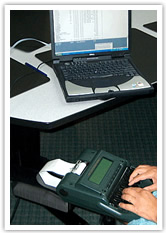
streaming realtime transcriptionStreaming Realtime transcription is the term for transcription by court reporters to deliver computer text of speech over the Internet within seconds of the words being spoken. Realtime can also mean transmitting audio and video of the proceedings. Users can see the text and video from any computer with Internet access as the witness answers questions. Streaming realtime can be viewed from any computer, whether in the same room as the proceedings or viewed remotely from another location.

Here are some of the benefits of using realtime transcription:

View text and video in real time during the proceedings.

This form of streaming transcription is accessible as it happens in real time. An attendee may not be in the same room, but through streaming realtime, they can watch from their office or remote location and see what is happening as it unfolds. No longer will you need to obtain a video to send to the party who wishes to see it.

Attend and participate in depositions from any computer remotely.

Streaming realtime can cut down on your travel time. Rather than driving for hours for a short deposition in which you are going to ask only a couple questions, you can now hire a court reporter to provide streaming realtime which you can access from your desk. Streaming realtime allows you to not only view but also participate in the deposition.

Carefully review testimony during proceedings as needed.

Unlike a regular video dep, streaming realtime allows you to see the written words on your computer screen as it happens. This can make it easier for you to follow the testimony and carefully review areas of special concern as they are being spoken.

Quickly search text during the proceedings.

As you are listening to the deposition, if you find a need to go back and review previous pieces of testimony, you can do so with streaming realtime transcription. You can then direct attention to the necessary areas of testimony, rather than wait until the transcript is prepared.

Easily search text and video, and view them simultaneously once proceedings have ended.

There may be portions of the video and transcript you want to review immediately after the deposition has concluded. You will be able to search text and video to review those portions of interest. A transcript may not be ready for several days. This feature allows you to review while the entire deposition is still fresh in your mind.

Obtain a rough draft copy of the transcript after proceedings have concluded.

If you want to send the testimony to an expert witness as soon as possible, obtaining a rough draft copy will allow you to do so. You may have a quick deadline coming up and need to be sure your witness has reviewed the testimony.

Getting Started:

When scheduling a deposition, ask your court reporting firm if they provide realtime text and video streaming. Realtime transcription is often provided at higher rates than regular transcription as it takes a more specialized and experienced court reporter, so be prepared to pay a little more for the convenience of realtime transcription.

If you would like to schedule a deposition with O’Brien and Bails Court Reporting, you can now do so online with our Deposition Scheduler. We will be happy to take care of the details for you.

Filed Under: Legal Professionals, Legal Technology

  • « Previous Page
  • 1
  • 2
  • 3
  • 4
  • 5
  • Next Page »

Copyright © 2026 · O'Brien & Bails | Michigan Court Reporters
251 N. Rose Street, Suite 200
Kalamazoo, MI 49007-3943
(Get Directions)
269.345.8436 · 800.878.8750 · Email Us
Image Credit