As a legal professional, there may be a time when you need to prepare a legal deposition notice. Preparing a notice of deposition is not a difficult task as long as you know what to include in the notice.
What Is a Notice of Deposition?
A document directing a witness to appear to answer questions under oath is called a notice of deposition. The notice includes a time and place where the examination is to occur. The notice is sent to all parties in a lawsuit so that everyone involved has been given notice of the event.
How Do I Prepare a Notice of Deposition?
In our experience, most legal professionals learn how to create a deposition notice by referring to one their firm has used in the past and using it as a template. Many law firms and attorneys have preferences for the exact language that will be used in the notice. However, if you have never prepared a notice of deposition and you have not been given a sample, we have some simple instructions to get you started.
First it is necessary to understand the parts of a deposition and what should be included.
Caption
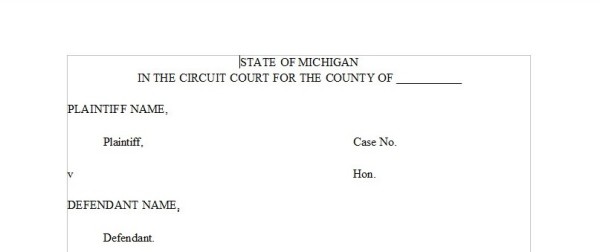
The full caption of the case should be included at the top of a notice of deposition. This will include the jurisdiction in which the case has been filed, the file number, and name of plaintiff(s) and defendant(s).
Names and Addresses of Attorneys
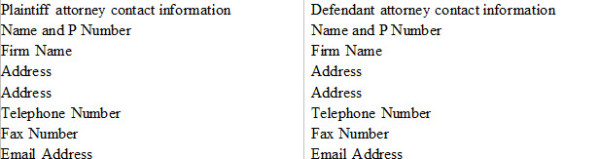
The names and addresses of each attorney of record should be included on the notice. Be sure to include the attorney’s bar number and designate which party the attorney is representing. You should also include the name of an attorney’s law firm, full street address, telephone number, fax number and email address.
Type of Notice
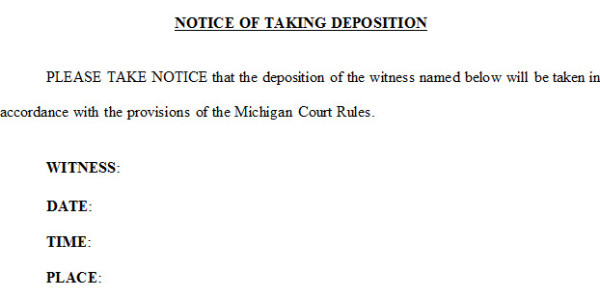
The title of the document should include the type of notice you are preparing. There are several types of deposition notices and including the title will provide clarification of which type you are preparing.
Date, Time and Location
The date, time and location should be prominently included in the notice language. Using bold type is a nice way to draw attention to this information on the notice.
Signature Block of the Requesting Attorney
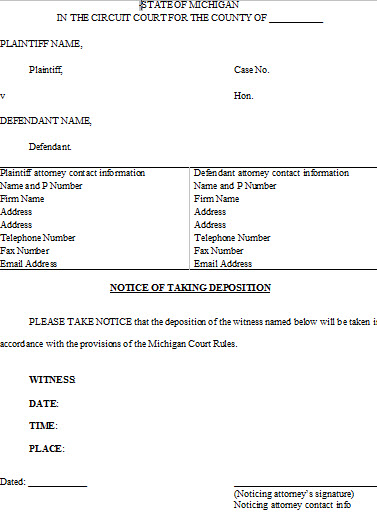
Including the requesting attorney’s signature block at the end of the notice allows everyone to be clear on who is calling for the deposition.

Putting It All Together
Below is a simple Notice of Deposition sample showing you all of the pieces put together to create the full document.
 At O’Brien and Bails, we have been providing realtime transcription for quite some time. Our clients find great value in viewing the transcribed spoken word as it is happening. If you’ve never connected to realtime in a deposition before, you may think it is technically difficult. But connecting to realtime is actually simple. Once you know what is involved, you will see that using realtime in your next deposition can be easy and of great value to you and your clients.
 As the owner of a court reporting firm, I am always trying to anticipate things that may go wrong when sending court reporters to depositions. But sometimes things come up we don’t expect. We always want to make the appropriate arrangements and avoid any mishaps that might occur, but sometimes it just isn’t possible to avoid some situations.
 Sitting in with a court reporter or interning with an agency is required by most court reporting programs as a requirement of graduation. Although many agencies do not offer an internship program, they do allow students to sit in with reporters and observe what a typical job may be. Sitting in with a reporter provides valuable experience. It can serve as motivation to pass out of school faster, provide extra practice time, help show what the profession entails and what a real-life job may be like. Learning procedure in class and practicing to a teacher’s dictation is not the same as experiencing it first-hand.
 When people ask what I do for a living and I respond, “I am a court reporter”, it usually merits one of these two questions: