O'Brien & Bails

Michigan Court Reporters

  • Home
  • About
  • Services
    • Court Reporting & Video
    • Records Retrieval
  • Schedule/Order
    • Upload Exhibit(s)
    • Order Transcript
  • Resources
    • Events & Webinars
    • Portal Sign Up
  • Blog
  • Contact
    • Map of Locations
    • Email Us

August 1, 2013 By Dawn Houghton

The Court Reporting Profession is Alive and Well

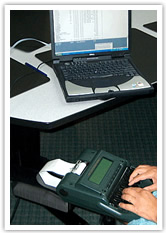
court reporting professionFor years, people have been warning court reporters and students that the future of court reporting is doomed. But contrary to the warnings, the industry has not collapsed. It is alive and well, even thriving due to advancements that have strengthened the profession.

Over 30 years ago, when I became a court reporter, I heard the warnings, “Court reporters will be replaced by electronic recording….you won’t have a job once video replaces you…voice recognition is going to kill court reporting.”

Over the years, I have seen these arguments and many more fall by the wayside. One by one, they were proven wrong as our skills grew stronger, our technology blossomed, and new career paths opened up that widened our profession. A career in court reporting is as stable today as it was years ago when I first began reporting.

Projections

The United States Department of Labor, Bureau of Labor and Statistics publishes the Occupational Outlook Handbook. This handbook is a source for career information about many different professions. The profiles feature hundreds of occupations and describe the occupations, the work environment, how to enter the field, and more. Each profile also includes employment projections for the 2010–2020 decade. The Occupational Outlook Handbook lists court reporting and gives facts about the industry that are beneficial to anyone who is thinking of entering the field. These facts are also reassuring to court reporters who are still hearing warnings of job shrinkage.

There are currently 22,000 court reporters estimated to be employed in the United States. The Bureau of Labor and Statistics projects this number to grow by 14% from 2010 to 2020. This is hardly an indication of a shrinking job market. In fact, the field is expected to grow at an average pace when compared to other occupations.

New Technology

The technology of court reporting has evolved over the years, and continues to advance as computers and the internet advance in sophistication. For years, the only technology used was a stenotype machine and a typewriter.

In the early ’80s, computer-aided transcription became the norm. Court reporters were able to teach computers how to read steno notes and help turn those notes into transcripts. Over the years, the computer-aided technology has developed into realtime reporting, allowing our steno notes to be instantaneously translated at a high rate of accuracy.

Video began to be incorporated to allow for video depositions accompanied by traditional transcription. With the evolution of the Internet, we now have the capability to transmit video, audio and realtime transcription to remote locations. The realtime nature of this new technology means parties can effectively participate in proceedings that are taking place in different geographical locations without leaving their own office.

These new technologies allow court reporters to not only stay relevant to legal proceedings, but also offer wider and more convenient services to clients

New Skills

With the new technology of computer-aided transcription in real time, court reporters began to evolve the traditional shorthand theory into a new system of writing that allowed for more accurate realtime transcription. Over the last 20 years, many reporters have retrained themselves in a new way of writing. This higher level of realtime accuracy allows reporters to project realtime translation and also deliver a highly accurate rough draft immediately upon the conclusion of the proceedings. The realtime translation is helpful to the attorneys while they are asking their questions of the witness.  The rough draft being supplied is popular for attorneys preparing for an upcoming trial who want the convenience of having the written testimony in front of them immediately after the proceedings have concluded.

Another skill that has developed in the last couple decades is legal video. The profession, as a whole, has pioneered legal video and streaming video so that they may deliver these services to clients who can take advantage of the technology and use it to their best benefit. The National Court Reporters Association offers certification for videographers who are interested in providing a high level of professional legal video to clients. This standardization allows the court reporting industry to continue to provide highly professional video for legal use.

The ability to commandeer these new technologies and use them to offer a wider variety of services has allowed court reporters to continue to stay relevant over the years.

New Career Paths

Once reporters adapted their writing to provide highly accurate realtime translation, reporters began offering their services to the deaf community and people who are severely hard of hearing. These realtime skills are now employed to provide broadcast captioning of live television shows, such as news broadcasts. Television captions are typically created before a show airs. In the case of live television shows, there is no opportunity to create captions before the show airs. Working with television stations, court reporters began using their skills to translate the spoken word in realtime and send it out with live television shows.

Realtime also became the method to provide Communication Access Realtime Translation (CART) to individuals in schools, the work place and live theater. With the CART provider writing what is being spoken, the person receiving assistance can then read the captions from a computer screen and is able to participate in live discussions that would typically be extremely difficult without the live captions being provided.

These new fields of broadcast captioning and Communication Access Realtime Translation has broadened a court reporter’s choices of fields to work in and expanded the number of jobs available in the profession.

A Profession That is Strong and Growing

This equation of new technologies, new skills and new career paths adds up to a profession that is alive and thriving. When people tell me court reporting is dying, I know they are wrong because of the developments I have watched and participated in over the years. The truth is the field of court reporting is stronger now than ever.

Filed Under: Court Reporters, Court Reporting

July 25, 2013 By Dawn Houghton

What Does a Court Reporting Production Manager Do?

carmaria - court reporting productionIn a large court reporting firm with several court reporters, there are many transcripts each week that need to be printed and prepared for delivery. Often larger court reporting firms have a production manager who is responsible for these tasks. For O’Brien and Bails, that person is Carmaria Beeke.

As production manager, Carmaria’s job is central to the operations of O’Brien and Bails. With Carmaria’s careful attention to detail, our clients receive their transcripts on time and come to rely on excellent service. Carmaria will tell you each transcript has many variables and details that need proper attention.

Duties of a Production Manager

In our main office in Kalamazoo, each week there are transcripts submitted from many court reporters that need to be e-mailed, printed, properly packaged and sent. Each reporter fills out a worksheet shortly after taking a deposition. The worksheet specifies instructions for Carmaria when she is processing the transcript, such as which attorney has ordered the original transcript and which attorneys receive copies. Another important detail is how many exhibits need to be attached to a transcript. There are many details such as these for every single transcript that leaves our office.

Once the order worksheets have been collected, the reporter transcribes the proceedings and sends the digital transcript to Carmaria, who then e-mails, prints, binds, invoices and seals each transcript preparing for delivery. Transcripts are typically delivered within 10 calendar days of the taking of the deposition. This means Carmaria is always mindful of the deadline on each transcript she processes.

Technical Ability and People Skills

When she is not producing transcripts, Carmaria helps with other tasks such as setting up the technology to conduct streaming video depositions. These are depositions that are being conducted with parties who are in separate locations. Streaming video allows all parties to be present in real time and participate in the deposition using streaming video from the comfort of their office and eliminating travel, especially for out of state depositions.

Not only does Carmaria set up online depositions, she also works with clients to ensure they are able to access the technology. Working with clients and technology requires a mixture of technical ability and people skills. Streaming video technology is new to many attorneys and legal staff, and there is a learning curve to using it. Carmaria helps each client understand the process and how they will participate.

As a production manager, Carmaria is familiar with many types of litigation software used by clients, and is able to produce transcripts in formats that are compatible with the software an attorney is using. Again, a mixture of technical skills and people skills comes into play. Carmaria helps each client receive the proper file format they need in order to incorporate the transcript files into their particular litigation software.

Master of Production

Before working as production manager, Carmaria came to the field with little experience and knowledge of the court reporting industry. But after working with O’Brien and Bails for almost two years, she has learned how the industry works and all the combinations of services clients may need when scheduling depositions and ordering transcripts. She is now a master of the process and continues to tweak and perfect the production of transcripts to make it better and more efficient.

When asked what she likes most about her job, Carmaria says, “Working with all our clients and court reporters and building those relationships.” She knows the importance of good client relationships and enjoys the process of getting to know each person she comes in contact with in the course of doing her job.

Everyday Challenges

Of course, there are also challenges to being a production manager. Carmaria knows that meeting deadlines is of utmost importance. She says most challenging are the situations when she is sending a transcript that is needed the very next day in a different location from the attorney who ordered it. She works with legal staff to discern where the transcript needs to be and what time it needs to be there. She may be able to rely on FedEx or UPS to deliver the transcript. She may need to find a court reporting office in the destination city who can print the file and deliver it to the courthouse. Carmaria continues to troubleshoot until she knows she has a way to get the transcript into the hands of the attorneys who need them.

Going the Extra Mile

Carmaria takes real ownership of her production manager position. Recently she was working to get a transcript ready to take to the UPS drop box before the daily pickup time at 6:00 p.m. Says Carmaria, “When I was leaving our office, I couldn’t decide which UPS box to go to. I knew it had to be there by 6:00 p.m. for pickup and I was almost sure I would not make it. I was on the GPS on my phone trying to figure out which was the closest location when I saw our regular UPS driver on the street.”

Carmaria decided to flag down the UPS driver to hand him her package. But first she had to reach the driver on the busy one-way streets of Kalamazoo. With the UPS driver in sight, she decided to pull into a parking spot in front of the truck. After she pulled in, she noticed the driver was already back in his truck and was pulling back out into traffic. She saw that he went down the street and around the corner. She decided to follow him once again. As soon as he was in sight again, she was stuck at a red light. Once the light turned green, she drove up and around the truck once again, parked her vehicle, jumped out and ran to the driver. He gladly accepted the package. Her hard work paid off. She got the package to the driver and the transcript was delivered the next day on time. “We always have candy in our office and Al usually takes a handful when he drops off packages at our office. I asked him what kind of candy was his favorite and bought him a big bag of Snickers bars to give him the next time he stopped in our office.”

Characteristics of a Successful Production Manager

When asked what traits are needed to be a successful production manager, Carmaria says, “You have to be organized, pay attention to details, multi-task, and be able to work in varying levels of intensity.”

Carmaria will tell you she has very specific processes she uses in order to make sure every detail is handled. “You have to be flexible,” says Carmaria. “I might get a call and suddenly have to drop everything I am doing, and pick back up later to finish.”

In a large court reporting firm like O’Brien and Bails, there are many behind-the-scenes tasks that need to be taken care of each and every day. We are able to give our customers excellent service because we have great people. Carmaria takes care of production and makes sure everything is running on time. It’s a big job, and she makes it look easy.

Dawn Houghton, the owner of O’Brien & Bails, knows she is very lucky to have Carmaria Beeke on her team.

Filed Under: Court Reporting

March 15, 2013 By Dawn Houghton

Kalamazoo Court Reporter Expands Knowledge in a Wide Variety of Areas

O’Brien & Bails isn’t just another court reporting firm.  We are made up of individual people who happen to be Michigan court reporters.  We thought we would take some time to let you get to know our court reporters.

Mary Howland has been a court reporter since 1978.  She has been with O’Brien and Bails since 1987 and is based out of our Kalamazoo office.

Mary Howland court reporterBefore becoming a court reporter, have you ever worked in other jobs or fields?

Court reporting is the first job I had other than summer jobs. I worked with Kelly Services in 1977 and got my first taste of “freelance” work.

Where did you grow up?

I grew up in the Kalamazoo/Battle Creek area. (Gull Lake)

What changes have you seen in the industry since you became a court reporter?

A major change and improvement is computerization.  No more paper steno notes to be typed manually or dictated for a typist.

What is the best part of being a court reporter?

The challenge of expanding your knowledge base in new areas when you cover expert testimony. It is a learning experience.

What is the most challenging part of being a court reporter?

Understanding witnesses with accents!!!

As a court reporter, what is your biggest fear?

My biggest fear and my recurring dream is showing up for a job and forgetting my equipment.

What has been your most challenging deposition?

Patent infringement on electrochromic mirrors with expert electrical/chemical engineers from Scotland with a thick brogue testifying about chemicals used in the patent.

Have you ever had funny things happen to you in a deposition?

Yes, there are frequently funny things. I had to do a deposition in a barn years ago when I had the old paper steno machine. A group of barn cats found the paper streaming in the paper tray to be an interesting toy. Not only did I have to report the vet’s testimony on the cow issues, I had to (okay I’ll admit it) kick cats away at the same time.

Do you have any tips about work/life balance?

Family is always first and foremost. I live for family, I wake up to work.

If you would like to schedule a deposition with Mary Howland or one of O’Brien and Bails’ professional court reporters, you can do so by going to our Online Deposition Scheduler.

Filed Under: Court Reporters, Court Reporting

February 8, 2013 By Dawn Houghton

Streaming Realtime Transcription For Legal Depositions

streaming realtime transcriptionStreaming Realtime transcription is the term for transcription by court reporters to deliver computer text of speech over the Internet within seconds of the words being spoken. Realtime can also mean transmitting audio and video of the proceedings. Users can see the text and video from any computer with Internet access as the witness answers questions. Streaming realtime can be viewed from any computer, whether in the same room as the proceedings or viewed remotely from another location.

Here are some of the benefits of using realtime transcription:

View text and video in real time during the proceedings.

This form of streaming transcription is accessible as it happens in real time. An attendee may not be in the same room, but through streaming realtime, they can watch from their office or remote location and see what is happening as it unfolds. No longer will you need to obtain a video to send to the party who wishes to see it.

Attend and participate in depositions from any computer remotely.

Streaming realtime can cut down on your travel time. Rather than driving for hours for a short deposition in which you are going to ask only a couple questions, you can now hire a court reporter to provide streaming realtime which you can access from your desk. Streaming realtime allows you to not only view but also participate in the deposition.

Carefully review testimony during proceedings as needed.

Unlike a regular video dep, streaming realtime allows you to see the written words on your computer screen as it happens. This can make it easier for you to follow the testimony and carefully review areas of special concern as they are being spoken.

Quickly search text during the proceedings.

As you are listening to the deposition, if you find a need to go back and review previous pieces of testimony, you can do so with streaming realtime transcription. You can then direct attention to the necessary areas of testimony, rather than wait until the transcript is prepared.

Easily search text and video, and view them simultaneously once proceedings have ended.

There may be portions of the video and transcript you want to review immediately after the deposition has concluded. You will be able to search text and video to review those portions of interest. A transcript may not be ready for several days. This feature allows you to review while the entire deposition is still fresh in your mind.

Obtain a rough draft copy of the transcript after proceedings have concluded.

If you want to send the testimony to an expert witness as soon as possible, obtaining a rough draft copy will allow you to do so. You may have a quick deadline coming up and need to be sure your witness has reviewed the testimony.

Getting Started:

When scheduling a deposition, ask your court reporting firm if they provide realtime text and video streaming. Realtime transcription is often provided at higher rates than regular transcription as it takes a more specialized and experienced court reporter, so be prepared to pay a little more for the convenience of realtime transcription.

If you would like to schedule a deposition with O’Brien and Bails Court Reporting, you can now do so online with our Deposition Scheduler. We will be happy to take care of the details for you.

Filed Under: Legal Professionals, Legal Technology

January 5, 2013 By Dawn Houghton

Every Day in Court Reporting Is Different

O’Brien & Bails isn’t just another court reporting firm.  We are made up of individual people who happen to be Michigan court reporters.  We thought we would take some time to let you get to know our court reporters.

Yvonne Lantz has been a court reporter since 1972.  She has been with O’Brien and Bails since 1992, and is based out of our Lansing, Michigan office.

Yvonne Lantz - court reporterHow long have you been a court reporter?

Since 1972.

How long have you been with O’Brien and Bails?

Since September 1992.

Have you ever worked in other jobs or fields besides court reporting?

Only the usual high school and college jobs, such as at a drive-in, in the high school office, at a local radio station, and worked for a pharmacy professor while in college.

Where did you grow up?

My first 11 years were in Belleville, Michigan, then we moved to Niles, Michigan

What changes have you seen in the industry since you became a court reporter?

Transcripts were produced by either dictating or typing it yourself. We had to use carbon sets, up to four or five pages at a time, and then manually try to put corrections in the typed document. Computer-aided transcription and realtime have been wonderful advances.

What is the best part of being a court reporter?

Every day is different, especially as a freelancer. I like going to different places, working with different people, and learning something new almost every day.

What is the most challenging part of being a court reporter?

Trying to keep up with people talking at the same time, especially when attorneys are arguing.

As a court reporter, what is your biggest fear?

That I will show up at a job and have my equipment malfunction.

What has been your most challenging deposition?

There have been quite a few, from veterinarians at MSU, physicians in all kinds of specialties, even a young five-year-old boy who wanted to crawl around under the table when being asked questions.

Have you ever had funny things happen to you in a deposition?

There have been quite a few over the years, but I can’t remember them all. One time I was in a burned home with an attorney who was inventorying what was left.

On one case, the attorneys were all very friendly with each other and would joke around a lot. I remember a younger attorney commenting to an older attorney that he looked great, and that he hoped he would look as good when he was the same age. Another attorney piped up, “No, that’s impossible.” When the younger attorney responded, “Why?”, the reply was, “You don’t look that good now!”

Do you have any tips about work/life balance?

Just try to keep the right priorities, but it can be difficult when the office is really busy.

If you would like to schedule a deposition with Yvonne Lantz or one of O’Brien and Bails’ professional court reporters, you can do so by going to our Online Deposition Scheduler.

Filed Under: Court Reporting

  • 1
  • 2
  • Next Page »

Copyright © 2025 · O'Brien & Bails | Michigan Court Reporters
251 N. Rose Street, Suite 200
Kalamazoo, MI 49007-3943
(Get Directions)
269.345.8436 · 800.878.8750 · Email Us
Image Credit