 For years, people have been warning court reporters and students that the future of court reporting is doomed. But contrary to the warnings, the industry has not collapsed. It is alive and well, even thriving due to advancements that have strengthened the profession.
Over 30 years ago, when I became a court reporter, I heard the warnings, “Court reporters will be replaced by electronic recording….you won’t have a job once video replaces you…voice recognition is going to kill court reporting.”
Over the years, I have seen these arguments and many more fall by the wayside. One by one, they were proven wrong as our skills grew stronger, our technology blossomed, and new career paths opened up that widened our profession. A career in court reporting is as stable today as it was years ago when I first began reporting.
Projections
The United States Department of Labor, Bureau of Labor and Statistics publishes the Occupational Outlook Handbook. This handbook is a source for career information about many different professions. The profiles feature hundreds of occupations and describe the occupations, the work environment, how to enter the field, and more. Each profile also includes employment projections for the 2010–2020 decade. The Occupational Outlook Handbook lists court reporting and gives facts about the industry that are beneficial to anyone who is thinking of entering the field. These facts are also reassuring to court reporters who are still hearing warnings of job shrinkage.
There are currently 22,000 court reporters estimated to be employed in the United States. The Bureau of Labor and Statistics projects this number to grow by 14% from 2010 to 2020. This is hardly an indication of a shrinking job market. In fact, the field is expected to grow at an average pace when compared to other occupations.
New Technology
The technology of court reporting has evolved over the years, and continues to advance as computers and the internet advance in sophistication. For years, the only technology used was a stenotype machine and a typewriter.
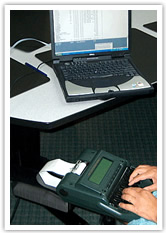
In the early ’80s, computer-aided transcription became the norm. Court reporters were able to teach computers how to read steno notes and help turn those notes into transcripts. Over the years, the computer-aided technology has developed into realtime reporting, allowing our steno notes to be instantaneously translated at a high rate of accuracy.
Video began to be incorporated to allow for video depositions accompanied by traditional transcription. With the evolution of the Internet, we now have the capability to transmit video, audio and realtime transcription to remote locations. The realtime nature of this new technology means parties can effectively participate in proceedings that are taking place in different geographical locations without leaving their own office.
These new technologies allow court reporters to not only stay relevant to legal proceedings, but also offer wider and more convenient services to clients
New Skills
With the new technology of computer-aided transcription in real time, court reporters began to evolve the traditional shorthand theory into a new system of writing that allowed for more accurate realtime transcription. Over the last 20 years, many reporters have retrained themselves in a new way of writing. This higher level of realtime accuracy allows reporters to project realtime translation and also deliver a highly accurate rough draft immediately upon the conclusion of the proceedings. The realtime translation is helpful to the attorneys while they are asking their questions of the witness. The rough draft being supplied is popular for attorneys preparing for an upcoming trial who want the convenience of having the written testimony in front of them immediately after the proceedings have concluded.
Another skill that has developed in the last couple decades is legal video. The profession, as a whole, has pioneered legal video and streaming video so that they may deliver these services to clients who can take advantage of the technology and use it to their best benefit. The National Court Reporters Association offers certification for videographers who are interested in providing a high level of professional legal video to clients. This standardization allows the court reporting industry to continue to provide highly professional video for legal use.
The ability to commandeer these new technologies and use them to offer a wider variety of services has allowed court reporters to continue to stay relevant over the years.
New Career Paths
Once reporters adapted their writing to provide highly accurate realtime translation, reporters began offering their services to the deaf community and people who are severely hard of hearing. These realtime skills are now employed to provide broadcast captioning of live television shows, such as news broadcasts. Television captions are typically created before a show airs. In the case of live television shows, there is no opportunity to create captions before the show airs. Working with television stations, court reporters began using their skills to translate the spoken word in realtime and send it out with live television shows.
Realtime also became the method to provide Communication Access Realtime Translation (CART) to individuals in schools, the work place and live theater. With the CART provider writing what is being spoken, the person receiving assistance can then read the captions from a computer screen and is able to participate in live discussions that would typically be extremely difficult without the live captions being provided.
These new fields of broadcast captioning and Communication Access Realtime Translation has broadened a court reporter’s choices of fields to work in and expanded the number of jobs available in the profession.
A Profession That is Strong and Growing
This equation of new technologies, new skills and new career paths adds up to a profession that is alive and thriving. When people tell me court reporting is dying, I know they are wrong because of the developments I have watched and participated in over the years. The truth is the field of court reporting is stronger now than ever.
 Streaming Realtime transcription is the term for transcription by court reporters to deliver computer text of speech over the Internet within seconds of the words being spoken. Realtime can also mean transmitting audio and video of the proceedings. Users can see the text and video from any computer with Internet access as the witness answers questions. Streaming realtime can be viewed from any computer, whether in the same room as the proceedings or viewed remotely from another location.