
O'Brien & Bails

Michigan Court Reporters

  • Home
  • About
  • Services
    • Court Reporting & Video
    • Records Retrieval
  • Schedule/Order
    • Upload Exhibit(s)
    • Order Transcript
  • Resources
    • Events & Webinars
    • Portal Sign Up
  • Blog
  • Contact
    • Map of Locations
    • Email Us

May 17, 2013 By Dawn Houghton

Michigan Court Reporters Care About Ethics

Michigan court reporters and ethicsFrom time to time, the issue of professional ethics arises in the field of court reporting nationally and in Michigan. Over the years, we have seen situations that might appear unethical, or at least seem to be in a gray area. As Michigan court reporters, we love our profession and want it to thrive for many years to come. Abiding by standards of ethics allows us to protect the responsibility we have been given to be the keepers of the record and to stay neutral and impartial while carrying out our responsibilities.

The National Court Reporters Association has devised a standard code of professional ethics that they ask reporters to agree to and abide by. This code is a good reference to consult in any situations that may involve potential ethical issues.

NCRA Code of Professional Ethics

A Member Shall:

  • Be fair and impartial toward each participant in all aspects of reported proceedings, and always offer to provide comparable services to all parties in a proceeding.
  • Be alert to situations that are conflicts of interest or that may give the appearance of a conflict of interest. If a conflict or a potential conflict arises, the Member shall disclose that conflict or potential conflict.
  • Guard against not only the fact but the appearance of impropriety.
  • Preserve the confidentiality and ensure the security of information, oral or written, entrusted to the Member by any of the parties in a proceeding.
  • Be truthful and accurate when making public statements or when advertising the Member’s qualifications or the services provided.
  • Refrain, as an official reporter, from freelance reporting activities that interfere with official duties and obligations.
  • Determine fees independently, except when established by statute or court order, entering into no unlawful agreements with other reporters on the fees to any user.
  • Refrain from giving, directly or indirectly, any gift or anything of value to attorneys or their staff, other clients or their staff, or any other persons or entities associated with any litigation, which exceeds $100 in the aggregate per recipient each year. Nothing offered in exchange for future work is permissible, regardless of its value. Pro bono services as defined by the NCRA Guidelines for Professional Practice or by applicable state and local laws, rules and regulations are permissible in any amount.
  • Maintain the integrity of the reporting profession.
  • Abide by the NCRA Constitution & Bylaws.

Not only is our professional code of ethics a guideline for court reporters, it is also a declaration of what attorneys and other members of the legal profession can expect from court reporters. We want our legal community to know we intend to abide by a high standard of ethical and professional behavior.

At O’Brien and Bails, our court reporters understand the code of ethics and strictly adhere to them. The standards above are guidance in all sorts of situations that arise in our field. We know that the integrity of our profession relies on our strict adherence to this code. We are also proud members of NCRA’s Ethics First program.

For more on court reporting ethics from our perspective, download this free report: “Thoughts on Court Reporter Ethics: From a Court Reporting Firm Owner”.

Filed Under: Court Reporters, Court Reporting

April 11, 2013 By Dawn Houghton

West Michigan Court Reporter Knows His Priorities

The reporters at O’Brien & Bails are not only true professionals, but great people to work with. We would like to take some time to let you get to know our court reporters.

Here is what reporter Carl DePerro has to say about his years of experience in the field of court reporting.

Carl Deperro court reporterI grew up in Detroit, and went through Detroit Public Schools when the schools were first rate.  I had an older cousin growing up who went into the profession of court reporting and did very well.  He always wanted me to go into the profession, and in 1975, after 18 months, my teacher at Macomb College, Mr. George Jackson, thought I was ready to work.  And so I began working two days a week in Romeo District Court reporting arraignments.  Being in front of a courtroom the size of a large bedroom with 50 suspected drinkers and drug offenders was one of those moments when you say to yourself “What am I doing here?”
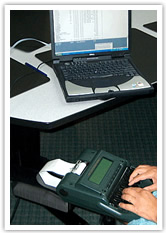
Later, I worked for my cousin in his fairly large firm doing mostly depositions and court work. He had a pool of typists to whom we dictated our notes.  Once transcribed, the transcript came back to me for proofreading, then back to the typist for corrections.

I wanted to move to Portland, Oregon for a better life with my new bride. In 1978, I obtained an official court reporting position in the town of Hillsboro.  In Hillsboro, I was the official reporter AND the typing pool.  I did it all myself.  It was difficult. Try typing a four-day trial for the Court of Appeals in 30 days while more trials are coming down the pike each day.

Back to Detroit in the early ’90s, I worked for my cousin again.

The transcript load was very heavy. I often worked nights and weekends.  But I was a family man, had small kids, and family came first.  Even if I had to turn a job down, make the boss/cousin angry, so be it.

It’s all about priorities.  You can make $100,000 a year, but if your kids don’t know who you are and you don’t know who they are or what they are doing, forget about it.  Who is happy? My grown-up kids and I have the best relationship today.  So much so that I and my wife have moved to Kalamazoo to be with our children and grandchildren. They actually wanted us here.

Kalamazoo and Grand Rapids, Michigan, are great places to live and work.  I am enamored with both places.  I began working with O’Brien and Bails the first of this year and have had a great experience so far with all of our clients.

Over the years, much has changed in court reporting. The computer has been such a great tool for us to produce transcripts. The reporters at O’Brien and Bails and the staff are very interested in staying on top of all the changes going on in the field.

To find out more about the field of court reporting, you might be interested in our recent blog post “What Does a Court Reporter Do?”

Filed Under: Court Reporters, Court Reporting

March 28, 2013 By Dawn Houghton

How Much Does It Cost to Hire a Court Reporter?

court reporter costFrom time to time we get asked the question, “How much does it cost to hire a court reporter for a legal deposition?” Often this question comes from a new attorney, a legal assistant, or a plaintiff or defendant not familiar with litigation practices. To answer the question, let’s first define “legal deposition.”

A deposition is testimony given by a plaintiff, a defendant or witness in a lawsuit before the case actually goes to trial. The person giving the statement is called the deponent. At the beginning of the deposition, the deponent is asked to swear or affirm that the statement will be truthful. The deposition is taken by a lawyer asking questions of the deponent. Usually, the lawyer for the plaintiff will take the deposition of the defendant, and the lawyer for the defendant will take the deposition of the plaintiff. However, other people with knowledge in a lawsuit may also be deposed. Either lawyer may take the deposition of these other people who have knowledge important to the case.

The deposition is taken down stenographically and transcribed by a court reporter. The court reporter’s fees will often include an hourly appearance fee, a fee for each page of the transcript produced after the deposition, as well as other costs such as fees for copying and attaching exhibits that were marked during the deposition.

Appearance Fees:

The appearance fee is typically an hourly fee charged for the time the court reporter actually spends at the deposition. If neither party requests that the transcript be prepared after the deposition, then the fee to the noticing party will usually include a non-write hourly appearance to cover the court reporter’s time during the deposition.

Page Fees:

The larger cost of hiring a court reporter is often the cost of the transcript. When one party orders the transcript, the court reporter will prepare a written record of the testimony, as well as charge a fee per page of transcription.

The attorney who orders the transcript will be charged a higher fee for the “original” transcript. Other parties may order copies of the transcript for a lesser page rate after the “original” has been ordered by a party.

If a transcript is ordered on an expedited or rush basis, the per-page rate can increase by 40% to 100% per page depending on the time of the requested delivery.  It will be more expensive to order daily delivery of a transcript versus two- or three-day delivery.  If you do need a transcript in a hurry, be sure to inform your court reporting agency as soon as possible so they can make the necessary arrangements. They will be able to tell you what the expedited page rate will be.

Most court reporters will provide a transcript prepared according to industry standards. On average, a standard deposition page is 25 lines per page, and 50 to 65 characters per line, although each State may have their own format rules the court reporters must follow.

In the State of Michigan, court reporters are provided with the standard format to follow that is outlined in the Michigan Manual for Court Reporters and Recorders which they must adhere to. There is not a specific character per line stated in the Manual, but from our calculations when using the instructions provided from the State of Michigan, we believe the characters in the longest line on the transcript falls in the 65 characters per line range.  This can be a very important distinction when calculating how much your transcript will really cost.

Additional Charges:

There are additional charges which may be incurred during a deposition. Most court reporters will retain any exhibits marked during the deposition and make copies to attach to all transcripts and usually will attach the original exhibits to the original transcript. Copy charges can range from 20 to 40 cents a page for black and white copies to a dollar per page or more for color copies or oversized copies. These rates are set by each court reporting agency and may vary.

Shipping and handling charges may also be included in the price of transcript. These fees can vary from agency to agency as well.

Some court reporting agencies also charge fees for condensed transcripts, ascii versions of the digital transcript, or keyword indexes. At O’Brien and Bails Court Reporting, we do not charge extra for these items.

When calling your court reporting agency to schedule a deposition, it is a good idea to ask about these charges as they do vary from agency to agency, and it is important to be aware of the format the agency is using in order to accurately compare the page rates.

Filed Under: Court Reporters, Court Reporting

March 15, 2013 By Dawn Houghton

Kalamazoo Court Reporter Expands Knowledge in a Wide Variety of Areas

O’Brien & Bails isn’t just another court reporting firm.  We are made up of individual people who happen to be Michigan court reporters.  We thought we would take some time to let you get to know our court reporters.

Mary Howland has been a court reporter since 1978.  She has been with O’Brien and Bails since 1987 and is based out of our Kalamazoo office.

Mary Howland court reporterBefore becoming a court reporter, have you ever worked in other jobs or fields?

Court reporting is the first job I had other than summer jobs. I worked with Kelly Services in 1977 and got my first taste of “freelance” work.

Where did you grow up?

I grew up in the Kalamazoo/Battle Creek area. (Gull Lake)

What changes have you seen in the industry since you became a court reporter?

A major change and improvement is computerization.  No more paper steno notes to be typed manually or dictated for a typist.

What is the best part of being a court reporter?

The challenge of expanding your knowledge base in new areas when you cover expert testimony. It is a learning experience.

What is the most challenging part of being a court reporter?

Understanding witnesses with accents!!!

As a court reporter, what is your biggest fear?

My biggest fear and my recurring dream is showing up for a job and forgetting my equipment.

What has been your most challenging deposition?

Patent infringement on electrochromic mirrors with expert electrical/chemical engineers from Scotland with a thick brogue testifying about chemicals used in the patent.

Have you ever had funny things happen to you in a deposition?

Yes, there are frequently funny things. I had to do a deposition in a barn years ago when I had the old paper steno machine. A group of barn cats found the paper streaming in the paper tray to be an interesting toy. Not only did I have to report the vet’s testimony on the cow issues, I had to (okay I’ll admit it) kick cats away at the same time.

Do you have any tips about work/life balance?

Family is always first and foremost. I live for family, I wake up to work.

If you would like to schedule a deposition with Mary Howland or one of O’Brien and Bails’ professional court reporters, you can do so by going to our Online Deposition Scheduler.

Filed Under: Court Reporters, Court Reporting

December 12, 2012 By Dawn Houghton

Time Management Tips for Court Reporters

Time Management Tips for Court ReportersMost court reporters spend a large part of their time working independently with the ability to flex some of their schedule. While this lends flexibility that most court reporters enjoy, it also means we are responsible for our own time management with many deadlines to meet. Sometimes meeting all of those deadlines can seem daunting and overwhelming.

To help tackle the overwhelm, here are some time management tips that will help you keep yourself organized and moving forward, accomplishing more work in less time.

Take the first 30 minutes of every day to plan your day.

Don’t start your day until you’ve completed your plan for how you will spend your time. For instance, are you going to work on editing your latest transcript first, then switch to proofreading later in the morning? Will you edit until the entire transcript is finished before switching tasks? Making decisions at the beginning of your day will allow you to easily move from one task to the next without hesitation.

Take five minutes before every task to decide what result you want to attain.

This will help you know what success looks like before you start. Take five minutes after each task to determine whether your desired result was achieved. If not, what was missing? What do you need to bring the task to completion?

Put up a “Do not disturb” sign when you absolutely have to get work done.

When I’m working in my home office and close my door, my family knows they are to let me work without disruption. Whether your office is in a traditional setting or a home office, it’s amazing how much you can get done when you are not being interrupted.

Resist answering the phone every time it rings.

Don’t answer email as soon as it shows up. Disconnect instant messaging. Don’t instantly give people your attention unless it’s absolutely crucial. Instead, schedule a time to answer email and return phone calls. Eliminating these constant interruptions can do wonders for boosting your productivity.

Break large, time-consuming tasks into smaller tasks.

Work on large tasks a few minutes at a time until you get them done. This works for large tasks as well as tasks you find yourself procrastinating over. For instance, when it’s time to organize my tax receipts, I know I would dread sitting down and going through all of them at once. So I have set up a plan, after consulting with my accountant, to spend a few minutes every week entering data.  Spending a few minutes each week makes it easier to accomplish, and that way, I stay up-to-date.

Know when you work best.

Are you a morning person? Then plan your priority tasks for the morning. Not sure when you work your best? Discover your best time by monitoring your productivity over a period of time. Once you find your best time, set your schedule to keep your best time free for your most important work. I know that I need to do proofreading in the morning, because I am often not as fresh in the afternoon and find it difficult to stay on task. But in the morning, I can get through many pages easily and know I didn’t miss anything.

Know how you work best.

I like to alternate between standing and sitting when I do my proofing.  I have a stand-up desk to make it easier for me to stay fresh and alert.  If I get too comfortable as I’m proofing, I find I am not as engaged as I need to be.  I sometimes set a timer so I don’t forget to change positions.

We all have our own time management skills that work for us.  Adding a new skill from time to time will help you make the most of the time you do have and allow you to be more productive and less stressed.

Filed Under: Court Reporters, Court Reporting

  • « Previous Page
  • 1
  • 2
  • 3
  • Next Page »

Copyright © 2026 · O'Brien & Bails | Michigan Court Reporters
251 N. Rose Street, Suite 200
Kalamazoo, MI 49007-3943
(Get Directions)
269.345.8436 · 800.878.8750 · Email Us
Image Credit