
O'Brien & Bails

Michigan Court Reporters

  • Home
  • About
  • Services
    • Court Reporting & Video
    • Records Retrieval
  • Schedule/Order
    • Upload Exhibit(s)
    • Order Transcript
  • Resources
    • Events & Webinars
    • Portal Sign Up
  • Blog
  • Contact
    • Map of Locations
    • Email Us

June 27, 2013 By Dawn Houghton

O’Brien and Bails Court Reporting Offers Online Transcript Ordering

online transcript orderingAt O’Brien and Bails, your Michigan court reporters, we are always looking for ways to bring more value to our clients. Anticipating your needs is one of our highest customer service priorities. We know there are times when you would like to order a deposition without calling our office. Whether it’s after hours or when it is not convenient to call, you may wish to have another way to order. We have been working on a project that will make it easier for you to order transcripts from us quickly and easily at any time of the day or night.

We are ready to unveil the O’Brien and Bails’ Online Transcript Order Form. When you’re ready to order a transcript, you can now do so online here at our website. Click the button entitled “Transcript Order Form”, and you will be taken to an ordering page. The following are some of the items you should know when ordering your transcript online. Not all are required, but it is helpful if you have as much information as you can when placing an order.

  • Attorney’s name
  • Email address
  • Phone number
  • Name of person submitting order
  • Date of deposition
  • Deponent’s name
  • Case caption
  • Date transcript is needed

Once you press the “Submit” button, we will receive your order. Our production staff will make sure your transcription is under way and delivered to you on time.

If this new way of ordering transcripts isn’t a fit for you, we are still very happy to speak with you on the phone and take your order for transcripts.

We appreciate you as a customer and want to offer you the ease and convenience of ordering your transcripts online.

If you would like to order your transcript online, you can do so here.

Filed Under: Court Reporters, Court Reporting

May 8, 2013 By Dawn Houghton

4 Bad Habits of Attorneys That Can Ruin A Legal Deposition Transcript

bad habits of attorneysAs any experienced attorney will tell you, there is a skill to taking a deposition that reads well for use in court. As court reporters, we are keenly aware of the inconsistencies that can occur when the spoken word is taken in a deposition and turned into a written transcript. Something that made perfect sense when spoken may appear to have a different meaning when read on the page. These speech habits can cause big problems when it comes time for a judge, witness, or jury to read the transcript.
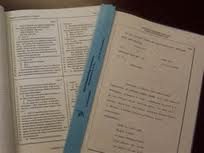
There are a number of common speaking styles that can cause problems in a deposition. Becoming aware of these habits will allow you to avoid them so the testimony of your witness goes into the record as intended.

1. False Starts

A false start is when a person begins to ask a question, stops mid-sentence, then begins again. We often speak this way without being aware of the habit. However, in a deposition, these false starts make it more difficult for the reader of the transcript to follow what is being said.

Example:

Q. Did you see the — I mean, this car — if there was a — well, what color was it?

With false starts, it can be unclear whether you got an answer to the full question. Your goal in taking a deposition is to glean information that is critical to your case. You want to be sure that information is easily understood by a reader.

The Solution:

One way to avoid false starts when asking questions is to gather your question in your mind before asking. Another tip is to slow down your pace of speaking, allowing yourself time to formulate the question fully.

2. Mumbling

A court reporter’s main duty is to record every spoken word. If a reporter doesn’t hear a question or an answer, he or she will ask you to repeat it. This is not a problem if it happens once or twice during a deposition. However, if you or your witness mumbles too many times, and your reporter needs to stop you several times this will disrupt the flow of questions and answers.

If a witness is mumbling and the reporter needs to interrupt to ask the witness to repeat, this often distracts the witness from his or her stream of thought during the answer. You want to be sure the witness’ full answers are in the record.

The Solution:

If you see the reporter is having trouble hearing the witness, it is important that you help remedy this situation. Here are a few suggestions:

  • Remind the witness to speak loudly and clearly so the reporter can hear.
  • Turn off noisy room fans if possible.
  • Close doors to active hallways.
  • Allow the reporter to sit as close to the witness as possible so every word can be easily heard.

3. Talking Over Others

In everyday communication, some people have a habit of interrupting before the other person is finished speaking. This is often an accepted pattern of speech. However, in a deposition, this pattern of speech can be deadly. When a speaker is interrupted, the reporter is hearing two streams of speech at the same time. However, the reporter has to write one stream, and then the second stream, one at a time. As a result, interruptions will immediately cause the reporter to have to write twice as fast. Writing twice as fast increases the stress on the reporter. Two people speaking at the same time also makes it difficult for both people to be heard and some words may be missed.

A court reporter will, at this point, stop the speakers and ask them to repeat. However, when a witness is asked to repeat an answer, they sometimes do not respond exactly the same as they did the first time, and that may mean that the answer you get was not the first answer you heard.

This speech pattern is difficult to read in a transcript with many partial sentences disrupting the flow of questions and answers.

Example:

Q. Did you see the —
A. Yes, yes, I did.
Q. — car coming down the —
A. Yes.
Q. — street?

Not only will this transcript be difficult to read, imagine having this testimony read into the record at a trial. The choppy nature of the read-back may make it difficult for the jury to follow.
The Solution:
To avoid this type of speech pattern, remind the witness they should allow you to finish your question entirely before answering. Also assure them that you will allow them to answer fully before asking another question.

4. Fast Talkers

As court reporters, we are tested and certified to write at a minimum speed of 225 words per minute. This is a fast rate of speaking.  However, many times attorneys and witnesses speak at even higher rates. Most reporters are able to write at a faster speed for a while, but it is difficult and exhausting. Once fatigue begins, it is increasingly more difficult for a reporter to continue to write at higher speeds and catch every word.

The Solution:

If you are speaking too fast, a reporter will stop you and ask you to slow down. However, be kind to your court reporter and speak at a moderate speed. If the witness is speaking too quickly, stop and remind the witness to speak at a moderate speed so that his or her answers can be recorded accurately and fully.

By paying attention to these unusual speech patterns, you will ensure that your questions and the witness’ answers are recorded accurately, you will receive a transcript that is easy to read, and your court reporter will appreciate your help in making an accurate record.

Filed Under: Legal Professionals

April 18, 2013 By Dawn Houghton

When Will I Get My Transcript After the Legal Deposition?

legal deposition transcriptsA common question I am asked by attorneys is “When can I expect to get my transcript?”

I thought I would take the opportunity to answer this question here in case you are wondering how long it takes to receive a transcript after a legal deposition has been taken.

When an attorney takes a deposition, the average time it takes a court reporter to finish a transcript and deliver it can be 10 days to two weeks. At O’Brien and Bails we strive to deliver transcripts in 10 days.

How to ensure you get your transcript on time

  • Before leaving the deposition, request that a transcript be prepared. If this is not possible at the deposition, then as soon as you know you will need a transcript, call the court reporter to make the request.
  • If there is a specific date or if you need a deposition sooner than the normal turn-around period, be sure to notify your court reporter as soon as possible.
  • Follow up with the court reporter if you have any questions regarding the expected delivery date of your transcript.
  • If you do not see your transcript within 2 weeks, you should contact your court reporter to inquire.

How a transcript is prepared

Understanding the transcription process may help you understand the issues involved in creating a timely transcript.

When proceedings are over and a transcript is ordered, the court reporter returns to the office, accesses the digital file, and reads through the entire proceedings to ensure accuracy. Any areas that did not translate correctly need to be edited. The reporter will compare steno shorthand notes to the translation to ensure accuracy.

A reporter will also pull information from many sources in order to make sure the transcript is as accurate as possible. For instance, they may do research on the Internet, they may contact the legal assistants involved in the case for specific spellings of names that are involved in the case if they are unable to find the information on the Internet, or they make look in reference material in order to make sure they have the terms spelled correctly.

Once finished editing, a court reporter then carefully reads through the transcript again to proofread for spelling or typographical errors.

Some reporters proofread the transcript a second time if the testimony involved technically complex subject matter.

The next step is the production aspect, which involves printing the transcript and also putting the transcript through several different computer programs in order to make it available electronically in many different formats. Exhibits are scanned in order to link them up electronically to the transcript so they are available, along with printing/copying the exhibits so they are available in hard copy. Then the transcript and exhibits are uploaded to a repository that can be accessed by the attorney/legal assistant, and also many times delivered electronically to the ordering parties.

Because there are several steps involved in preparing an official transcript, a court reporter has several things to consider when a rush transcript is ordered. A reporter will often have other transcripts to finish before she or he can work on finalizing yours. Special arrangements need to be made to juggle transcript deadlines. That is why having advanced notice of a rush transcript order allows a reporter to make special arrangements to clear out his or her previous workload so your transcript can be finalized more quickly.

Receiving your transcript when you need it

Court reporters understand there are circumstances under which you may need a transcript faster than the normal turn-around time. If we know you have a need for your transcript by a certain date, every effort will be made to meet your request. It can be common for court reporters to work through the night to make a transcript available the next day when they are requested.  A good rule of thumb is that it takes two to three hours to finalize a transcript for every hour the reporter writes the testimony at the deposition.

At O’Brien & Bails, we are dedicated to getting you the transcript when you need it!

If you would like to schedule an O’Brien and Bails court reporter for your next deposition, use our Deposition Scheduler online.

Filed Under: Court Reporting, Legal Professionals

April 11, 2013 By Dawn Houghton

West Michigan Court Reporter Knows His Priorities

The reporters at O’Brien & Bails are not only true professionals, but great people to work with. We would like to take some time to let you get to know our court reporters.

Here is what reporter Carl DePerro has to say about his years of experience in the field of court reporting.

Carl Deperro court reporterI grew up in Detroit, and went through Detroit Public Schools when the schools were first rate.  I had an older cousin growing up who went into the profession of court reporting and did very well.  He always wanted me to go into the profession, and in 1975, after 18 months, my teacher at Macomb College, Mr. George Jackson, thought I was ready to work.  And so I began working two days a week in Romeo District Court reporting arraignments.  Being in front of a courtroom the size of a large bedroom with 50 suspected drinkers and drug offenders was one of those moments when you say to yourself “What am I doing here?”
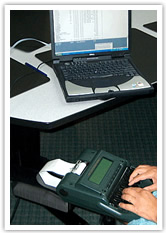
Later, I worked for my cousin in his fairly large firm doing mostly depositions and court work. He had a pool of typists to whom we dictated our notes.  Once transcribed, the transcript came back to me for proofreading, then back to the typist for corrections.

I wanted to move to Portland, Oregon for a better life with my new bride. In 1978, I obtained an official court reporting position in the town of Hillsboro.  In Hillsboro, I was the official reporter AND the typing pool.  I did it all myself.  It was difficult. Try typing a four-day trial for the Court of Appeals in 30 days while more trials are coming down the pike each day.

Back to Detroit in the early ’90s, I worked for my cousin again.

The transcript load was very heavy. I often worked nights and weekends.  But I was a family man, had small kids, and family came first.  Even if I had to turn a job down, make the boss/cousin angry, so be it.

It’s all about priorities.  You can make $100,000 a year, but if your kids don’t know who you are and you don’t know who they are or what they are doing, forget about it.  Who is happy? My grown-up kids and I have the best relationship today.  So much so that I and my wife have moved to Kalamazoo to be with our children and grandchildren. They actually wanted us here.

Kalamazoo and Grand Rapids, Michigan, are great places to live and work.  I am enamored with both places.  I began working with O’Brien and Bails the first of this year and have had a great experience so far with all of our clients.

Over the years, much has changed in court reporting. The computer has been such a great tool for us to produce transcripts. The reporters at O’Brien and Bails and the staff are very interested in staying on top of all the changes going on in the field.

To find out more about the field of court reporting, you might be interested in our recent blog post “What Does a Court Reporter Do?”

Filed Under: Court Reporters, Court Reporting

March 28, 2013 By Dawn Houghton

How Much Does It Cost to Hire a Court Reporter?

court reporter costFrom time to time we get asked the question, “How much does it cost to hire a court reporter for a legal deposition?” Often this question comes from a new attorney, a legal assistant, or a plaintiff or defendant not familiar with litigation practices. To answer the question, let’s first define “legal deposition.”

A deposition is testimony given by a plaintiff, a defendant or witness in a lawsuit before the case actually goes to trial. The person giving the statement is called the deponent. At the beginning of the deposition, the deponent is asked to swear or affirm that the statement will be truthful. The deposition is taken by a lawyer asking questions of the deponent. Usually, the lawyer for the plaintiff will take the deposition of the defendant, and the lawyer for the defendant will take the deposition of the plaintiff. However, other people with knowledge in a lawsuit may also be deposed. Either lawyer may take the deposition of these other people who have knowledge important to the case.

The deposition is taken down stenographically and transcribed by a court reporter. The court reporter’s fees will often include an hourly appearance fee, a fee for each page of the transcript produced after the deposition, as well as other costs such as fees for copying and attaching exhibits that were marked during the deposition.

Appearance Fees:

The appearance fee is typically an hourly fee charged for the time the court reporter actually spends at the deposition. If neither party requests that the transcript be prepared after the deposition, then the fee to the noticing party will usually include a non-write hourly appearance to cover the court reporter’s time during the deposition.

Page Fees:

The larger cost of hiring a court reporter is often the cost of the transcript. When one party orders the transcript, the court reporter will prepare a written record of the testimony, as well as charge a fee per page of transcription.

The attorney who orders the transcript will be charged a higher fee for the “original” transcript. Other parties may order copies of the transcript for a lesser page rate after the “original” has been ordered by a party.

If a transcript is ordered on an expedited or rush basis, the per-page rate can increase by 40% to 100% per page depending on the time of the requested delivery.  It will be more expensive to order daily delivery of a transcript versus two- or three-day delivery.  If you do need a transcript in a hurry, be sure to inform your court reporting agency as soon as possible so they can make the necessary arrangements. They will be able to tell you what the expedited page rate will be.

Most court reporters will provide a transcript prepared according to industry standards. On average, a standard deposition page is 25 lines per page, and 50 to 65 characters per line, although each State may have their own format rules the court reporters must follow.

In the State of Michigan, court reporters are provided with the standard format to follow that is outlined in the Michigan Manual for Court Reporters and Recorders which they must adhere to. There is not a specific character per line stated in the Manual, but from our calculations when using the instructions provided from the State of Michigan, we believe the characters in the longest line on the transcript falls in the 65 characters per line range.  This can be a very important distinction when calculating how much your transcript will really cost.

Additional Charges:

There are additional charges which may be incurred during a deposition. Most court reporters will retain any exhibits marked during the deposition and make copies to attach to all transcripts and usually will attach the original exhibits to the original transcript. Copy charges can range from 20 to 40 cents a page for black and white copies to a dollar per page or more for color copies or oversized copies. These rates are set by each court reporting agency and may vary.

Shipping and handling charges may also be included in the price of transcript. These fees can vary from agency to agency as well.

Some court reporting agencies also charge fees for condensed transcripts, ascii versions of the digital transcript, or keyword indexes. At O’Brien and Bails Court Reporting, we do not charge extra for these items.

When calling your court reporting agency to schedule a deposition, it is a good idea to ask about these charges as they do vary from agency to agency, and it is important to be aware of the format the agency is using in order to accurately compare the page rates.

Filed Under: Court Reporters, Court Reporting

  • « Previous Page
  • 1
  • 2
  • 3
  • 4
  • 5
  • Next Page »

Copyright © 2026 · O'Brien & Bails | Michigan Court Reporters
251 N. Rose Street, Suite 200
Kalamazoo, MI 49007-3943
(Get Directions)
269.345.8436 · 800.878.8750 · Email Us
Image Credit